
New Socialist Medicine publication: Special issue of European Journal for the History of Medicine and Health shines a light on socialist world
BLOG by Michael Makowski
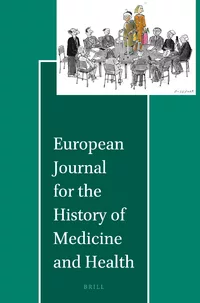
The European Journal for the History of Medicine and Health volume 82 special issue makes an important intervention into global health history by shifting focus to the socialist world. Titled “Socialist Health: of Shortages and Solidarity,” the special issue investigates how the socialist world impacted global health, affecting health policies, creating international collaborations, and pioneering medical research. The “socialist world” – once encompassing around one-third of the world’s population – has often been forgotten in the historiography of global health and medicine. The scholars participating in this special issue, however, present state of the art research which joins a growing literature revealing the socialist world as an interconnected and global space in histories of health and medicine.
Socialist Medicine team members Luis Aue, Alila Brossard Antonielli, and Dóra Vargha edited this special issue, which builds off a Berlin workshop organized by the project in October 2023. The issue explores a newer history of health, challenging common narratives of modernity and development by looking at people, things, knowledge, and practices which moved between and within socialist states. With case studies from Asia, Africa, Eastern Europe, and Latin America, the issue also seeks to work against simplified Cold War narratives and analyses which privilege the Soviet Union as the singular actor in a bipolar conflict with the West. This is also a primary goal of the Socialist Medicine project, which goes beyond the rhetoric of opposition between East and West and revises the history of global health by including the socialist world as its co-creator.
Prof. Dóra Varga, principal investigator of Socialist Medicine, introduces the special issue and stakes out the importance of socialist health in history beyond the trope of shortage. In addition to their co-authored conclusion “Socialist Health: Of Solidarity,” Socialist Medicine postdoctoral fellows Luis Aue and Alila Brossard Antonielli each author their own articles in the special issue – Aue on East Germany’s transnational network-building in tropical medicine expertise and Brossard Antonielli on the cooperantes medical professionals’ experience and exchange in post-independence, socialist Mozambique. Seven more articles look at the flow of people, ideas, and technology across socialist states and the Third World, from China to Brazil and Yugoslavia to Madagascar (to name a few).
Solidarity was one of the guiding principles of the socialist world in international health. Socialist states employed solidarity as a moral ideal and a political strategy to interact with outside actors and other states, and to present an alternative way to the Western, liberal model of health internationalism. Of course, acts and claims to solidarity can be problematized, as Aue and Brossard Antonelli point out in the conclusion. Disagreements, misunderstandings, and resistances to socialist health models, for example, are called on as areas of deeper inquiry for better understanding the socialist world’s impact on global health.
The special issue reveals the socialist world as an integral part of international health and an important actor in global health history. Far from being isolated, the socialist world contained multitudes of spaces of exchange and collaboration. This history is full of challenge and opportunity – the scholars in this special issue access new and multiple archives, apply innovative methodologies, and participate in academic collaborations and interdisciplinary scholarship. The special issue is a refreshing renewal of historiography which challenges dominant narratives of international health history and an important contribution to the growing histories of global socialism and socialist internationalism.
The European Journal for the History of Medicine and Health is an open access journal. The special issue can be read in its entirety here.
New Socialist Medicine publication: Special issue of European Journal for the History of Medicine and Health shines a light on socialist world
BLOG by Gersende Reynal
The European Journal for the History of Medicine and Health volume 82 special issue makes an important intervention into global health history by shifting focus to the socialist world. Titled “Socialist Health: of Shortages and Solidarity,” the special issue investigates how the socialist world impacted global health, affecting health policies, creating international collaborations, and pioneering medical research. The “socialist world” – once encompassing around one-third of the world’s population – has often been forgotten in the historiography of global health and medicine. The scholars participating in this special issue, however, present state of the art research which joins a growing literature revealing the socialist world as an interconnected and global space in histories of health and medicine.
Socialist Medicine team members Luis Aue, Alila Brossard Antonielli, and Dóra Vargha edited this special issue, which builds off a Berlin workshop organized by the project in October 2023. The issue explores a newer history of health, challenging common narratives of modernity and development by looking at people, things, knowledge, and practices which moved between and within socialist states. With case studies from Asia, Africa, Eastern Europe, and Latin America, the issue also seeks to work against simplified Cold War narratives and analyses which privilege the Soviet Union as the singular actor in a bipolar conflict with the West. This is also a primary goal of the Socialist Medicine project, which goes beyond the rhetoric of opposition between East and West and revises the history of global health by including the socialist world as its co-creator.
Prof. Dóra Varga, principal investigator of Socialist Medicine, introduces the special issue and stakes out the importance of socialist health in history beyond the trope of shortage. In addition to their co-authored conclusion “Socialist Health: Of Solidarity,” Socialist Medicine postdoctoral fellows Luis Aue and Alila Brossard Antonielli each author their own articles in the special issue – Aue on East Germany’s transnational network-building in tropical medicine expertise and Brossard Antonielli on the cooperantes medical professionals’ experience and exchange in post-independence, socialist Mozambique. Seven more articles look at the flow of people, ideas, and technology across socialist states and the Third World, from China to Brazil and Yugoslavia to Madagascar (to name a few).
Solidarity was one of the guiding principles of the socialist world in international health. Socialist states employed solidarity as a moral ideal and a political strategy to interact with outside actors and other states, and to present an alternative way to the Western, liberal model of health internationalism. Of course, acts and claims to solidarity can be problematized, as Aue and Brossard Antonelli point out in the conclusion. Disagreements, misunderstandings, and resistances to socialist health models, for example, are called on as areas of deeper inquiry for better understanding the socialist world’s impact on global health.
The special issue reveals the socialist world as an integral part of international health and an important actor in global health history. Far from being isolated, the socialist world contained multitudes of spaces of exchange and collaboration. This history is full of challenge and opportunity – the scholars in this special issue access new and multiple archives, apply innovative methodologies, and participate in academic collaborations and interdisciplinary scholarship. The special issue is a refreshing renewal of historiography which challenges dominant narratives of international health history and an important contribution to the growing histories of global socialism and socialist internationalism.
The European Journal for the History of Medicine and Health is an open access journal. The special issue can be read in its entirety here.

